“Why should a media ministry engage in public theology?” This is the question that partners and friends have asked me most frequently over the past few years. Frankly, I also constantly ask myself this same question.
Even more “troublesome” is the fact that my boss—Rev. Kurt Selles, the director of ReFrame Ministries—also asks me this question. Out of responsibility for the ministry, he must know why we should invest our limited resources in this seemingly intangible direction. And I must find an answer sufficient to convince him.
Rev. Selles is an American missionary who served in Taiwan and China for nearly twenty years during the 1980s and 1990s, and he has a special affection for Chinese culture and history. We often discuss these topics in private. I remember around the Spring Festival in 2024, I excitedly shared with him a new book about Chinese gospel posters from a century ago. He replied calmly, “I think I have these posters in my basement.” This sentence led us together into an unexpected story, and it also helped me find the best answer to that question.
Gospel Posters: A Crucial Participant
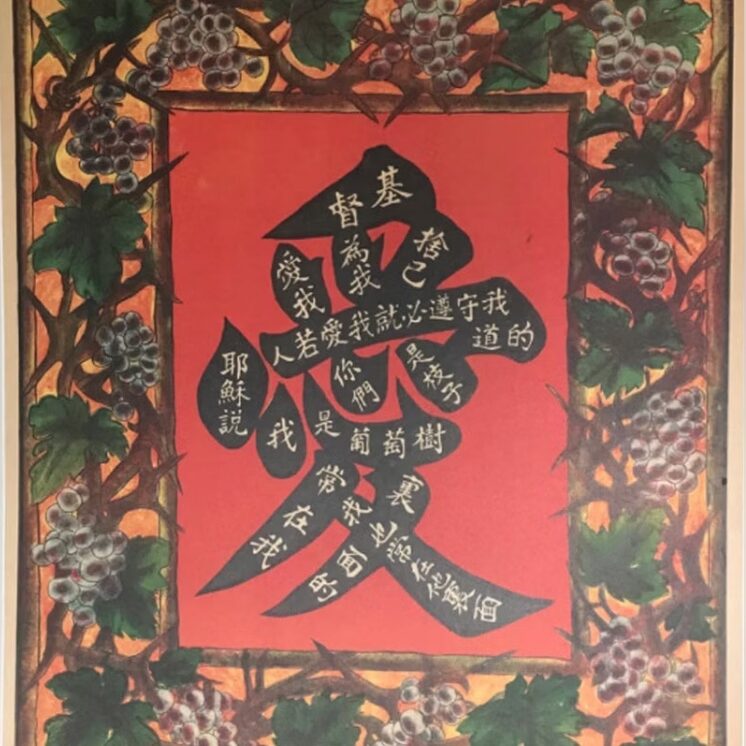
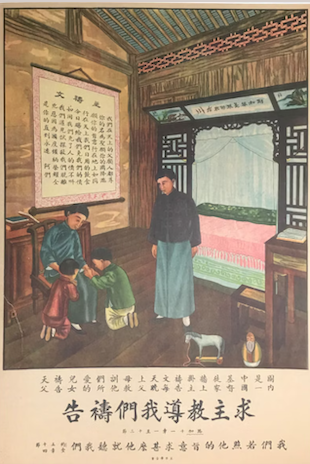
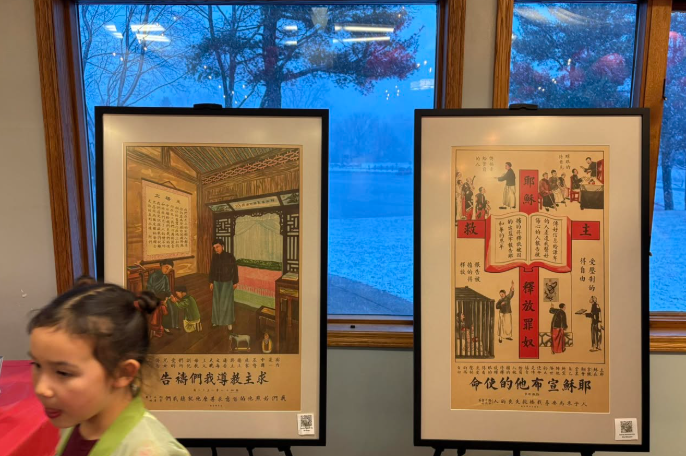
To make a long story short, we actually found, in his basement, twenty well-preserved gospel posters from nearly a century ago. Mission boards and Chinese believers collaboratively created these posters at the time, and they feature bright colors and vivid content. More importantly, people did not hang them inside churches. Instead, they pasted them on street corners, in teahouses, and at markets. Some even included a special note at the bottom: Please hang in a public place!
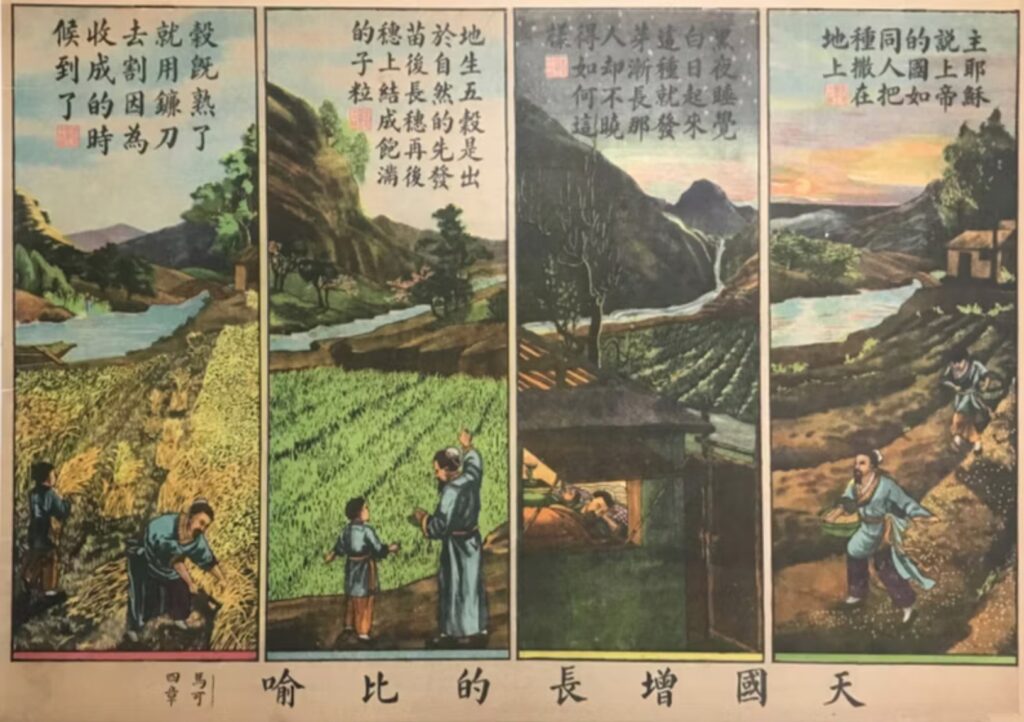
China possesses a long history of printing technology, and posters were not a novel format. A century ago, however, Chinese people saw such a massive quantity of industrialized, mass-printed, and brightly colored posters for the first time. Calendar posters, propaganda prints, and commercial posters spread across the country. This explosion of visual culture was unprecedented in history. The church did not miss this media revolution. It even played an important role, and it matched secular counterparts in both design quality and distribution volume. These posters told biblical stories, explained religious doctrines, and proclaimed gospel truths. They competed with political propaganda and commercial advertisements for the attention of ordinary people, and they offered a new imagination of the future in an era filled with war and turmoil.
New Media: Bad Money Drives Out Good
When seeing these posters, I suddenly realized that they were the new media of their time! Today, we actually face and respond to similar issues. The only difference is that WeChat and TikTok have replaced street corners and teahouses, and public spaces are no longer paper and walls, but mobile phone screens and social media platforms. Just like the posters from a century ago, today’s new media is undoubtedly a media revolution with an even broader impact. But how do we perform? In 2017, we conducted a broad and comprehensive data analysis of Christian content on WeChat official accounts. We found that four of the five most popular “Christian” accounts at the time were actually generated by content troll farms. Their page views exceeded the combined total of the other ninety-five accounts, yet they were full of falsehoods and severely distorted biblical truths.
In 2018, we surveyed a group of official accounts with clearer and more orthodox faith backgrounds. From a technical perspective, they needed improvement in layout and design. The deeper problem, however, was that their content lacked connection to daily life, lacked attention to public issues, and failed to engage in dialogue with the world. When the church ignores what people care about, fails to understand people’s needs, and does not comprehend the “market”—that is, when it cannot communicate effectively—heretics and commercial opportunists will seize the opportunity. This even creates the embarrassing situation of so-called “bad money driving out good.” Looking back at the gospel posters from a century ago, we truly have much to review and learn.
The Popular Theology Behind the Posters
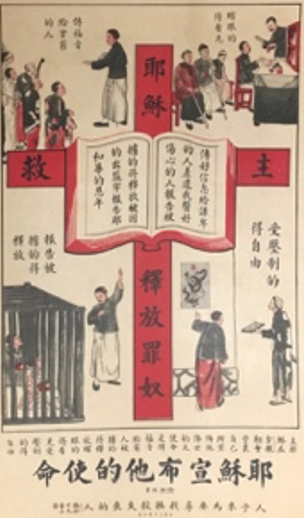
Interestingly, the gospel posters of that era were initially designed precisely for “marketing.” As media products, these posters were market-driven. Who was the audience? Were they literate? What did they desire in a turbulent era? Compared to cigarettes and soap, what different kinds of comfort and cleanliness could Christians offer? Compared to the futures that the Chinese Communist Party and the Kuomintang envisioned for China, what different vision could Christians bring to the country? We can see the answers to all these questions in these posters. We can say that the content creators listened to that era. Furthermore, we also see in the design their full understanding of the Chinese cultural context and their respect for Chinese culture. This made the posters easily acceptable to both illiterate people and the gentry. In an era when most Chinese people had not yet heard of Christianity, we can say that these posters served as a practice of popular theology, with a focus on popularization.
Naturally, the limitations of these posters are equally obvious because of this. A lack of depth and a simplification of the gospel are the most common criticisms. Some approaches to indigenization remained superficial, lacked vitality and substance, and even appeared somewhat incongruous. Meanwhile, a “market orientation” can easily turn into “pleasing the audience,” which then becomes what we call “prosperity theology” today. These issues are problems that Christian communication and missions must constantly monitor.
New Media and Public Theology
In today’s Chinese context, popular theology has gradually become equivalent to what we generally understand as public theology. It aims to enable the church to participate in society, engage in dialogue with society, and pay attention to public social issues, thereby expressing Christian positions in public life and promoting social welfare and justice. For most of Chinese society, however, the modern concept of the “public life” remains unfamiliar. The church lacks sufficient understanding and experience of the “public sphere,” and we are always full of doubts and worries about “theology.” Many Christians want to actively respond to public issues, but they lack a sound and holistic ideological framework. As a result, their presence on new media generally appears superficial, narrow, and chaotic. At the end of 2013, I proposed the concept of “the public communication of Christianity” based on observations and practices in new media. Consequently, I wanted to understand and study public theology more, only to find that the Chinese church had very few resources. Over the following decade, the term public theology seemed to gain popularity for a time, but its actual content was a mixed bag, with no consensus.
God, the Creator of all, is by nature not private but public. If the church confines its faith to the sanctuary, it loses its essence. Public theology is not merely a response to and theological reflection on social problems or issues. Nor is it simply the expression of theology using universal language and logic. Rather, it is primarily and foremost the knowledge, interpretation, and witness of God and his “public” nature. This reality dictates that the study of public theology closely connects with church pastoral care, missional communication, and life witness. A healthy and holistic public theology takes shape, grows, and is tested through ongoing engagement across different approaches, levels, and contexts.
A Mission Across Eras
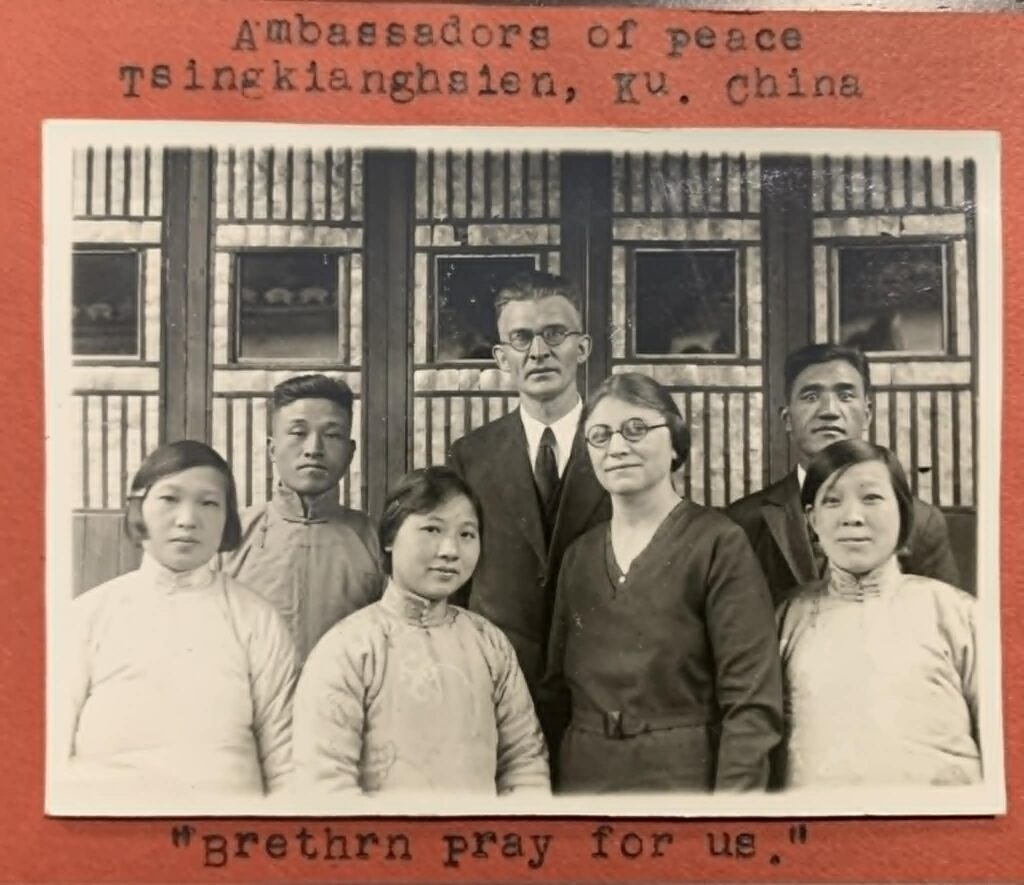
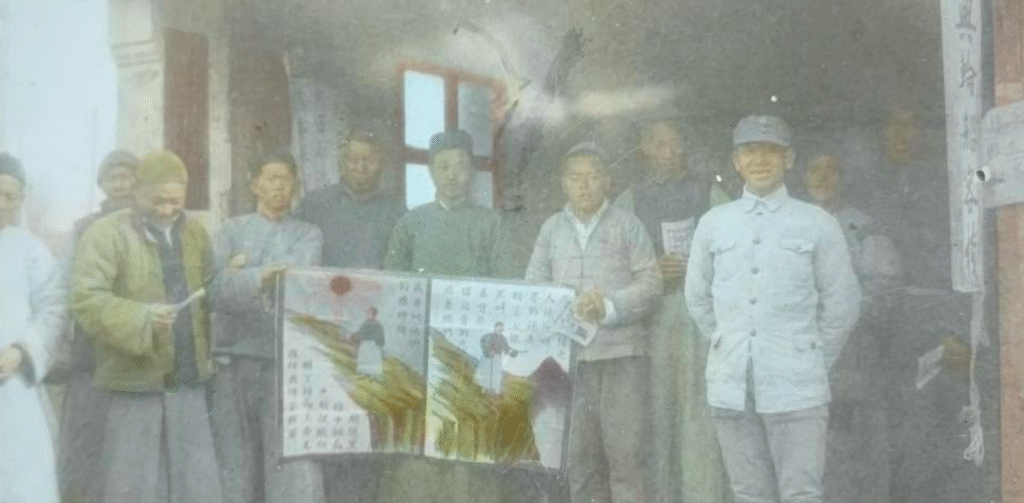
Reverend Selles’s grandparents collected these posters when they served as missionaries in China between 1925 and 1949. The archives at Calvin University still hold photographs they took at the time, and these photos show how they used these posters for evangelism. In those old photographs, his grandmother is naturally a frequent main character. However, a Chinese evangelist also appears often, even far more frequently than his grandmother. I was surprised to discover that this Chinese evangelist’s surname was actually “An,” the same as mine. “An” is not a common surname. Of course, he is not my grandfather. I am from North China, and this photo was taken in Jiangsu. But this is already wonderful enough. At that moment, I felt as if I had traveled through time and space, or as if I had entered a parallel universe. A century ago, Reverend Selles’s grandparents and a Chinese evangelist surnamed An used posters to spread the gospel in public spaces. Today, their grandson works alongside another Chinese evangelist surnamed An to conduct missions using new media.
I do not know if they engaged in discussions about “public theology” and related topics back then. However, this coincidence allows me to better answer the question of “why a media organization should promote the development of public theology.”
In the era of new media, every Christian is not only a user of media products but also a creator and distributor of content. Our WeChat Moments and every post we make serve as the posters on today’s street corners and walls. New media makes it so that “everyone is media.” For Christians, “everyone doing missions” becomes both a possibility and a necessity. No matter the era, we all need to listen to our times, and we all need to co-create with God. Whether through posters or new media, your mission and mine have never changed.


