Introduction
The Malaysian Chinese Church inherits the missiological tradition brought by Western missionaries, particularly the traditional fundamentalist and evangelical view of the gospel that emphasizes “believing in Jesus and going to heaven.” While this view of the gospel certainly values individual salvation, it easily weakens the gospel’s capacity to renew society, culture, politics, and the created order within real-world contexts.
This article explores how the Malaysian Chinese Church can reinterpret “holistic mission” within a context characterized by ethnic pluralism, religious diversity, and multiple structural tensions, and how it can find possibilities for constructing a public theology from this reinterpretation. In other words, the question is not merely how the church can continue to grow. Rather, the question is: can the Malaysian Chinese Church shift from a community primarily concerned with its own survival to one that participates in the holistic mission of God and seeks the peace of this land?
The Mission of God and the Holistic Gospel
In The Mission of God, Christopher J. H. Wright systematically articulates the concepts of “holistic mission/holistic evangelism/holistic gospel.” He reminds us that if “mission” translates directly as “evangelism,” people in the Chinese context easily and mechanically equate it with “preaching and sending.” This obscures its more original meaning: it is God’s own mission. The correct sequence should be to first ask what the mission of God is, and only then ask how the church participates in this mission.
Leading people to Christ is certainly an important goal of the gospel, but it is not the only goal. The arrival of the gospel of the kingdom of heaven can address various dimensions, such as human physiological needs, psychological brokenness, spiritual oppression, social injustice, and public relations. Jesus fed the five thousand, healed the sick, conversed with the Samaritan woman, delivered the demon-possessed man in the region of the Gerasenes, and entered Zacchaeus’s house to compel him to confront his economic injustice. All these actions demonstrate that the gospel does not deal abstractly with the “soul,” but concretely enters into human life, relationships, and social reality.
The Exodus event in the Old Testament operates in the same way. God liberated the Israelites from imperial slavery, supplied their daily needs, established a covenant with them, handed down the law, and built a just and orderly community that feared God. This demonstrates that God’s salvation is never confined to the abstract level of “saving souls.” Instead, it involves the comprehensive renewal of political, economic, social, and religious life.
When public theology intervenes in missiology, therefore, it broadens the missiological vision on the one hand, directing its attention toward public policy, institutional structures, and environmental crises. It helps missiologyidentify, on the other hand, “structural sin.” Poverty is not merely a problem of personal morality; it can also be a systemic problem caused by political, economic, and class structures. Merely giving a poor person bread and leading them in a sinner’s prayer sometimes fails to truly address the root causes of their chronic poverty.
John the Baptist’s preaching by the Jordan River embodies exactly this holism. He called on the crowds to share their surplus food and clothing with those in need, while also demanding that tax collectors collect no more than the prescribed amount and that soldiers extort money from no one. In other words, repentance is not merely an adjustment of personal morality. It must also manifest as a renewal of justice and institutions. Jesus’s mission follows the same lineage as John the Baptist’s, simultaneously calling for repentance and renewal at both the individual and structural levels.
Once it realizes this point, if the Malaysian Chinese Church wishes to reinterpret mission, it must reposition its own mission work within the “holistic mission of God.” The church’s “church missions” should not be viewed as a department that operates only when resources are available. Instead, it should be understood as how the entire church participates in God’s project of renewing the world within the local pluralistic context.
In other words, public theology is precisely the “missing piece” in the missiology of the Malaysian Chinese Church. Mission that lacks a public theological consciousness easily degenerates into a method of “cultural-religious colonization”—the focus of the mission shifts from “creating goodness and beauty” to “numerical and ministerial growth,” and the targets of mission are viewed as an “untapped market” rather than “a world that is loved and saved alongside us.”
Malaysian Social History and the Chinese Context
To consider the localized mission of the Malaysian Chinese Church, one must return to the social and historical context of this land. Since the Ming dynasty, traces of Chinese people “migrating to the Southern Seas” were already visible during the era of the Malacca Sultanate. By the British colonial period, the colonial metropole systematically imported large numbers of Chinese and Indian laborers from China and India to mine tin, build railways, and plant rubber. The Chinese were mostly concentrated in mining areas, which later developed into towns, and ethnic Chinese gradually developed commerce and enterprises. Indian laborers were mostly assigned to rubber estates and suburbs along the railways. Later, as the rubber industry declined and the highway network developed, many estate areas became increasingly marginalized.
After the war, Malaya’s three major ethnic groups—Malays, Chinese, and Indians—formed an alliance within the colonial-era political party framework to negotiate with Britain for independence. Malaya gained independence in 1957, and in 1963, Malaya united with Sabah, Sarawak, and Singapore to form the Federation of Malaysia, though Singapore withdrew in 1965.
During the negotiation process for independence, a certain political and social consensus existed: the descendants of immigrants from China and India would no longer “return to their roots like falling leaves” (luoye guigen) but would instead “take root where they landed” (luodi shenggen). They would relinquish their political identities tied to their original homelands, acquire citizenship in the new nation, and simultaneously respect the special status of Malays and the indigenous groups of East Malaysia as “bumiputera” (tuzhu). Since the founding of the nation, however, complex racial politics and religious issues have gradually eroded this original vision of national relations.
Malay nationalism was originally a mobilizing force against colonial rule, but its extended development has sometimes evolved into hostility toward “all outsiders.” The Chinese and other non-Malay ethnic groups have long felt a massive disparity between their contributions to nation-building and their experiences regarding the distribution of political, educational, and economic resources. Institutional affirmative action policies and political discourse structures frequently cause non-Malay ethnic groups to feel that they occupy the position of “second-class citizens.”
The problem of ethno-religious hegemony is therefore particularly prominent in Malaysia. The Constitution stipulates that “a Malay must be a Muslim,” which causes ethnic identity and religious identity to overlap to a high degree. Any incident that people interpret as “offending Malays/Muslims” can rapidly escalate into an ethno-religious dispute under the influence of public opinion and political manipulation. Ethnic relations at the level of many towns and villages are actually relatively harmonious. Once politicians deliberately manipulate issues, however, the social atmosphere abruptly becomes tense.
As it lives long-term in this environment of structural injustice and inequality, the Chinese community inevitably accumulates deep scars and resentful emotions. Benedict Anderson’s concept of “reverse racism” can be used precisely to describe this phenomenon: a group that was originally marginalized gradually develops an “imagination of the other” tinged with hostility and contempt over a long period of suppression, thereby replicating or even reverse-replicating racism at the linguistic and psychological levels.
In such a national context, the Malaysian Chinese Church must seriously confront a question: as a member of this society, how does the church understand and respond to these deep structural injustices and scars? In an environment long filled with racial tension, religious sensitivity, and environmental crises, what kind of public theology and missiology does the Chinese Church need in order to face these challenges, rather than continuing to remain in a state of internal self-maintenance within its congregations?
From “The Church in Malaysia” to “The Church of Malaysia”
From the perspective of church history, the early Malaysian church was fundamentally the “fruit” of foreign missionaries preaching the gospel among the Chinese, Indians, and indigenous peoples, and its spiritual ethos naturally bears a strong imprint of Western missions. Today, the Malaysian church exists primarily in four linguistic groups: English-speaking churches, Chinese-speaking churches, Tamil-speaking churches, and Malay-speaking/indigenous churches.
Regarding Chinese-speaking churches, older generations of believers often retain an emotional connection to “China” in their identity, and this imagination of the “motherland” sometimes even surpasses their identification with “Malaysia.” Compounded by the fact that some politicians frequently attack the Chinese with rhetoric like “go back to China,” over time, many Chinese people experience a weakened sense of national belonging and identity, and there is no shortage of powerless remarks such as “at worst, I will just emigrate.”
At the cultural level, the identity of the Malaysian Chinese community has also undergone multiple shifts. The early generation grew up on Hong Kong television dramas and Hong Kong pop culture, and later they were influenced by Chinese film and television, Korean culture, and overseas media. This media environment similarly shapes the church. Whether using English or Chinese, many churches rely heavily on overseas spiritual resources. From books to online sermons and training courses, many experiential cases and examples come from abroad. Over time, local believers’ familiarity with overseas contexts may even exceed their understanding of their own country’s reality.
In recent years, quite a few local church leaders have called for “learning to think locally.” This is not merely a methodological change, but a reshaping of identity. Take the “40-Day Fast and Prayer for the Nation” promoted by the National Evangelical Christian Fellowship Malaysia as an example. This ministry has continued for more than twenty years and has gradually driven churches of various streams to develop a higher sensitivity to the national situation and local issues. Many denominations and congregations now regularly hold “prayer meetings to watch over the nation,” where believers learn in prayer to intercede for Malaysia’s politics, justice, ethnic relations, and environmental conditions.
As the church begins to pay attention and pray from a local perspective, believers’ sense of belonging and national identity also increases. The church is no longer merely “the church in Malaysia,” but consciously begins to become “the church of Malaysia.” It cares deeply about what happens on this land, including political abuse of power and corruption, tense ethnic relations, the neglect of vulnerable groups, and the imbalance in land and environmental development.
The Theology of Lament: Seeking the Peace of the City
Situated long-term amid structural injustice and political manipulation, an ethnic group inevitably forms a deep-seated victim consciousness. Not every Malaysian Chinese person directly suffers explicit oppression in their daily life—for many town and village residents, grassroots interactions between different races are often relatively harmonious. The collective impression of “feeling oppressed” is, however, deeply rooted in the minds of a significant portion of the Chinese population.
With the development of social media, extreme rhetoric and fake news spread rapidly, some politicians or opinion leaders deliberately incite ethnic sentiments, causing many Chinese people and other ethnic groups to respond in similarly emotional ways. A “victim complex” thus continuously ferments within the Chinese community.
To forge genuine peace in society, one must first possess the will and resolve for peace. The long-standing impression of oppression causes many Malaysian Chinese to fall into a psychological victim complex, which they use as their fundamental perspective for viewing other ethnic groups. The Chinese community also develops its own forms of racism internally; people use derogatory terms for Malays on social media, for example, or describe them with stereotypical labels like “lazy” and “stupid.” This mentality makes it difficult for the Chinese to establish genuine mutual trust and peaceful relations with the Malays and other ethnic groups. Regrettably, such emotions and attitudes sometimes also permeate the interior of the Chinese Church.
In this reality, the question becomes prominent: what is the way out for the Chinese community? Can the Chinese Church play a role of renewal and reconciliation within it? Can the church help Chinese society break out of the cycle of the victim complex and reverse racism?
If one views this from the grand narrative of the Bible—although the early Chinese experience of leaving their hometowns and migrating to the Southern Seas cannot be simply analogized to the Israelites exiled to Babylon—both contain resonant elements such as “settling in a foreign land,” “ambiguous identity,” and “feeling incompletely accepted.” For many ethnic Chinese settled in Malaysia, the feeling of “living in this place but being viewed as an outsider” is indeed a scar that is difficult to ignore.
Against this background, the Old Testament “theology of lament” provides an important interpretive framework. The theology of lament is not self-pity and emotional venting. Instead, it is a profound tradition of national and communal reflection—the traumatized community honestly pours out its pain before God, acknowledges that it also has sins and blind spots and simultaneously rediscovers hope and mission through repentance and trust.
In Jeremiah 29, although the exiles in Babylon occupied a weak and marginalized position within the imperial structure, God still commanded them: “But seek the welfare of the city where I have sent you into exile, and pray to the Lord on its behalf, for in its welfare you will find your welfare” (ESV). This passage acknowledges on the one hand that the Israelites were in “a city controlled by the other.” On the other hand, it points out that even in a foreign land and within an oppressive structure, they still possessed the mission to seek the peace of the city where they resided.
These words are both a comfort and a sending. The exiles are not passive characters who merely “survive temporarily.” Instead, they are active participants whom God calls to forge peace in a foreign land. If the Malaysian Chinese Church can draw resources from the theology of lament, it will have the opportunity, when facing its own historical scars and social injustices, to no longer merely wallow in victimhood emotions and continuously respond to reality with extreme rhetoric and reverse racism. Instead, it can honestly articulate its pain before God, repent for its own sins and prejudices against the other, and set out anew from God’s healing and sending.
Injury is an objective fact. However, if the Chinese Church remains in a victim complex for a long time, it may gradually evolve into the role of a new perpetrator. Only when the Chinese Church itself is healed by the Lord, recognizes that it is both “the injured” and “the called,” and learns in lament and prayer to seek the peace of this land, can it truly become a spiritual driving force that promotes social change and prevents scars from being replicated across generations.
Ethnic Integration in Daily Life
The preceding part discussed national structures, ethnic tensions, and public policy, with the focus falling mostly on the macro-political level. For the majority of believers, however, issues of national politics and systems often appear distant and massive. To transform public theology from an abstract concept into a practicable path of life, one must start from the daily world of ordinary believers.
Deep-rooted racist thinking is one of the greatest challenges that Malaysia’s pluralistic community structure faces. Racism easily treats its own ethnic group as the center of the universe. It views resources and benefits as “exclusive to its own group,” rejects or disparages the other, and continuously manufactures ethnic conflicts in the public space to stimulate internal “solidarity against the outside.” In the past, political parties and certain civil groups frequently relied on inciting ethnic sentiments to win political capital and grassroots support.
In this atmosphere, slogans such as “Malays first,” “Chinese first,” and “Indians first” emerge endlessly, but this logic of priority only produces more hatred and cannot bring lasting peace. To break monoculturalism, people must learn to embrace the practice of pluralistic coexistence.
Dr. Jimmy Chong Chuin Min of Seminari Theoloji Malaysia proposes the concept of “multiethnic integration in daily life,” viewing it as a Christian spiritual-political action. This perspective advocates converting the ideology of “a certain ethnic group first” into a “Malaysians first” perspective. On the premise of acknowledging the subjectivity of each ethnic group, it involves learning to appreciate the goodness and beauty of other ethnic cultures. It also involves adopting attitudes and behaviors conducive to promoting ethnic harmony in everyday life situations—including how one treats others, speaks on social media, observes etiquette in public spaces, and interacts with other ethnic groups in various scenarios.
These actions may seem trivial, but they are precisely the grassroots spiritual-political practices that the general public can participate in. When people change society through government policy reform, they enact a top-down structural change. When they shape the social atmosphere through the daily interactions of individuals and communities, they enact a bottom-up cultural change. The two are not in opposition but echo each other.
From this perspective, ethnic integration is actually the daily politics of Christians—striving to be reconciled with everyone in every relationship, learning to love neighbors and accommodate differences, and practicing the acceptance and respect of the other. This way of life resembles the early church situated in the torn society of the Roman Empire two thousand years ago. Through the gospel witness of loving enemies and practicing forgiveness and reconciliation, the early church gradually influenced the value orientation of the entire empire.
Religious Dialogue and Interreligious Cooperation
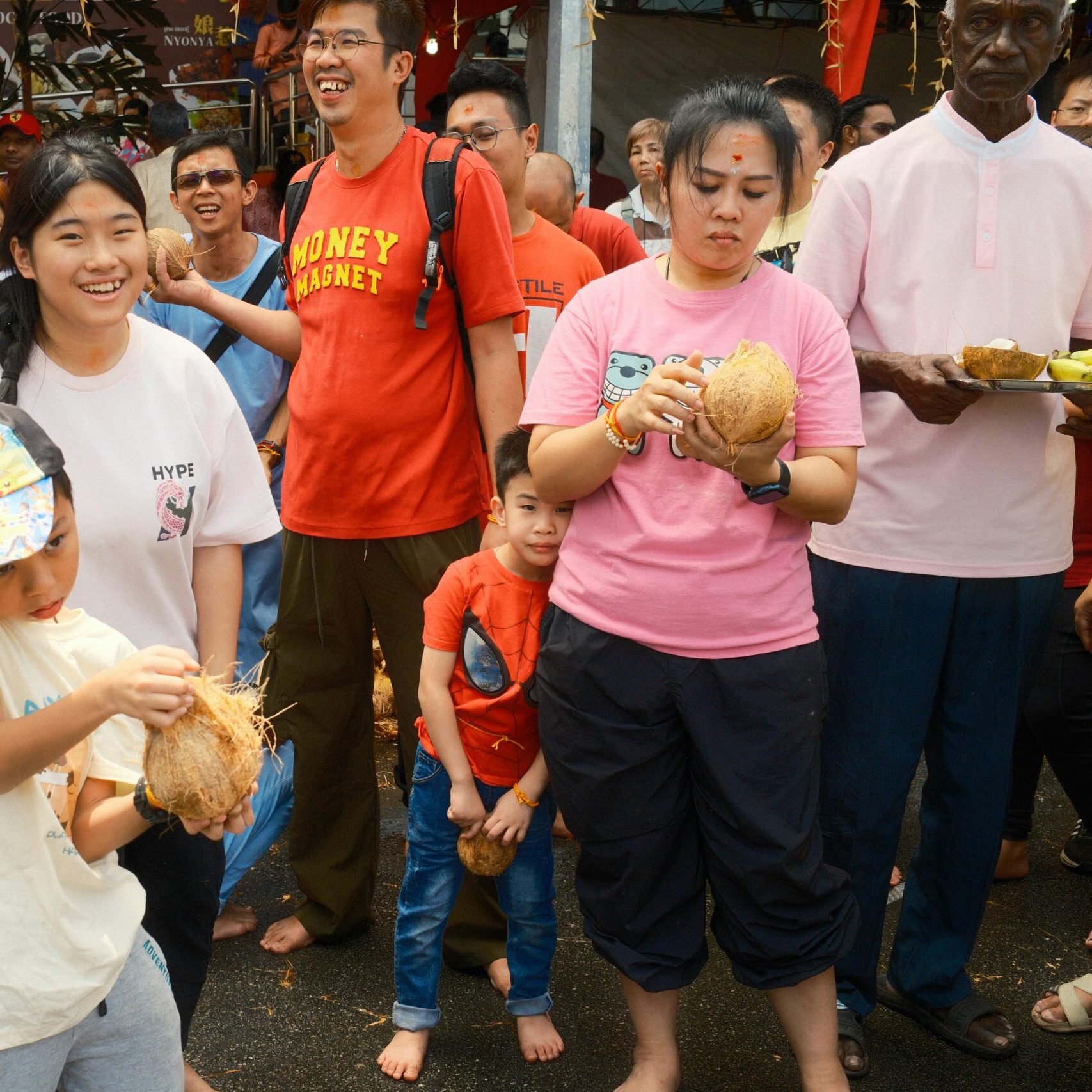
Malaysia is a multireligious country. Mosques, Chinese temples, churches, and Hindu temples are scattered throughout cities and towns, and religious festivals such as Thaipusam, Vesak, and Christmas have become part of public life. In such a context, daily contact with believers of different religions is the most ordinary thing. Religious topics are also extremely sensitive, however; once exploited by those with ulterior motives, they easily manufacture tension and group antagonism.
Some people believe that religious dialogue is “ineffective” because it “cannot directly lead people to believe in Jesus.” This view clearly misunderstands the significance of religious dialogue. Religious dialogue is not a substitute arena for evangelism or preaching. Its purpose is not to convert the other party, but to acknowledge and confront the massive influence of religion in society. Religion is culture, and it is also education. Furthermore, it intertwines with media and politics, and it exerts a profound influence on social emotions and value trends.
Dialogue does not mean abandoning one’s own faith stance or understanding of truth. Rather, on the premise of firm faith, it means being willing to listen to the narratives of the other, finding space for cooperation amid differences, and forging basic consensus on common humanity and public concern.
Regarding religious freedom and rights, Malaysia has experienced multiple instances in recent years where Islamic authorities restricted the practices of other religions. For example, when authorities prohibited the use of the word “Allah” to refer to God in the Malay-language Christian Bible, they caused immense inconvenience for indigenous churches that have long used Indonesian and Malay Bibles. Incidents of this kind demonstrate that the public space for non-Islamic religions frequently faces the risk of being compressed.
In the face of such challenges, Christianity, Catholicism, Buddhism, Hinduism, Sikhism, and Daoism jointly established the Malaysian Consultative Council of Buddhism, Christianity, Hinduism, Sikhism and Taoism as a platform for communication and coordination between religious communities and the government. Whenever the government implements policies that violate the spirit of religious freedom, or when extreme and discriminatory public rhetoric appears in society, the council can raise collective concern, striving to maintain basic equality and justice within the reality of multireligious coexistence.
For the Malaysian church, this is an important experience in public practice. In the past, the church was accustomed to viewing other religions as targets for evangelism and rarely considered the possibility of cooperating hand in hand with other religious groups from the perspective of civil society when jointly facing oppression and injustice. The current context compels the church to learn to form strategic cooperation with other religions regarding civil rights, religious freedom, and the public good, while maintaining its stance on gospel truth.
Speaking for the Other and Caring for the Land
Socially vulnerable groups and environmental issues are particularly prominent in contemporary Malaysia. Groups such as refugees, migrant workers, stateless persons, and the Bajau sea nomads of East Malaysia face severe economic and social acceptance challenges under biased policies. They are the most vulnerable groups at the bottom of society, possessing the weakest survival resources and social status.
The Chinese Church has been established in Malaysia for nearly two hundred years. Many of those who were initially a vulnerable group have now become a middle class equipped with education, professional expertise, and economic capacity. In addition to advocating for its own ethnic group, the Chinese Church should also begin to pay attention to the needs of the other. It should speak out for the demands of the other and pay the price for doing so. The Chinese Church not only needs to explore its own theology as a formerly diasporic people but should also begin to seek happiness and rights for other diasporic groups.
The Chinese Church must, therefore, not only develop institutions for poverty alleviation, medical care, and education in terms of social concern. It must further become a “missional church”—adopting “for others” as the identity orientation of its ultimate concern.
Land and ecology are equally part of the public mission. Malaysia possesses one of the oldest tropical rainforests in the world and is rich in natural resources. In recent decades, however, illegal logging and overdevelopment have drastically reduced the national forest area. Many regions have experienced severe ecological imbalance due to a lack of planning and regulation. Whenever the rainy season comes, floods cause an inestimable loss of human life and property, and rural indigenous people and grassroots citizens often bear the brunt.
Ecological destruction is not merely a technical or policy issue; it is a theological subject concerning “land—habitation—justice.” Environmental conservation involves the safety and dignity of human habitation, and it also involves the right of other created beings to survive. From a theological perspective, this belongs to the core domain of stewardship theology.
In recent years, some churches in Malaysia have begun to consider the importance of ecotheology, calling on congregations to pay attention to environmental issues and participate in environmental protection actions.Although not many churches actively engage in the practice of ecological theology at present, this is already a starting point that one cannot ignore. It helps the church realize that “seeking the peace of this land” also includes taking responsibility for the shared destiny of the land itself and its inhabitants.
Conclusion
Overall, the church is not legally a “statutory public institution,” and it does not need to replace the government, enterprises, or social organizations to assume all public responsibilities. From the perspective of faith, however, the church cannot avoid considering its own public positioning. The Christian faith has never taught believers merely to look out for themselves; rather, it continuously calls people to “look to the interests of others”—just as Paul states in Philippians 2:4: “Let each of you look not only to his own interests, but also to the interests of others.”
The kingdom of heaven points to the transformation of the world, and the transformation of the world has no prewritten operational formula. The church needs to narrate the present, discern needs, conduct theological reflection, and repeatedly search for practical paths that better embody the true meaning of the gospel within a constantly changing context.
The actions and reflections in which the Malaysian Chinese Church has already participated, past and present—whether regarding workplace ethics, religious dialogue, social construction, the struggle for religious rights, or ecological conservation issues—can all be viewed as a modest starting point intended to inspire further contributions. These experiences represent the continuation of contemporary local Christians conducting faith explorations within their context, and they follow the legacy of the early missionaries who brought the gospel to this land.
From the perspective of mission, what the contemporary Malaysian Chinese Church needs is no longer merely mission work focused on “preaching and sending” in the traditional sense. Instead, it must consciously place itself within a larger framework: the mission of God.
On this land, the mission of God concretely means a willingness to play the role of promoting peace, justice, and reconciliation within a pluralistic community. It means a willingness to respond to injustice and brokenness with gospel values in all areas of life and public arenas. It also means a willingness, in prayer and in action, to seek the peace of this city and the renewal of this nation.
This understanding of mission not only continues the essence of the gospel but also points the direction for the Malaysian Chinese Church to carry out its public mission in the future.